Quebec City from Montreal
Three hours by train, the only walled city north of Mexico stacks itself above the St. Lawrence — the longest Canadian day this network runs, and the train is what makes it civilized. The falls on the edge of town out-drop Niagara.
The short version
- VIA Rail runs Montreal Central to Gare du Palais in about 3.25 hours several times daily — book at viarail.ca; the station lands you a ten-minute walk from the Lower Town, which is the alarm’s rested-arrival case made concrete.
- Old Québec is the continent’s only walled city north of Mexico — UNESCO-listed ramparts circling an upper town of convents and cannon and a lower town of 17th-century lanes, connected by stairs and the funicular’s short ride.
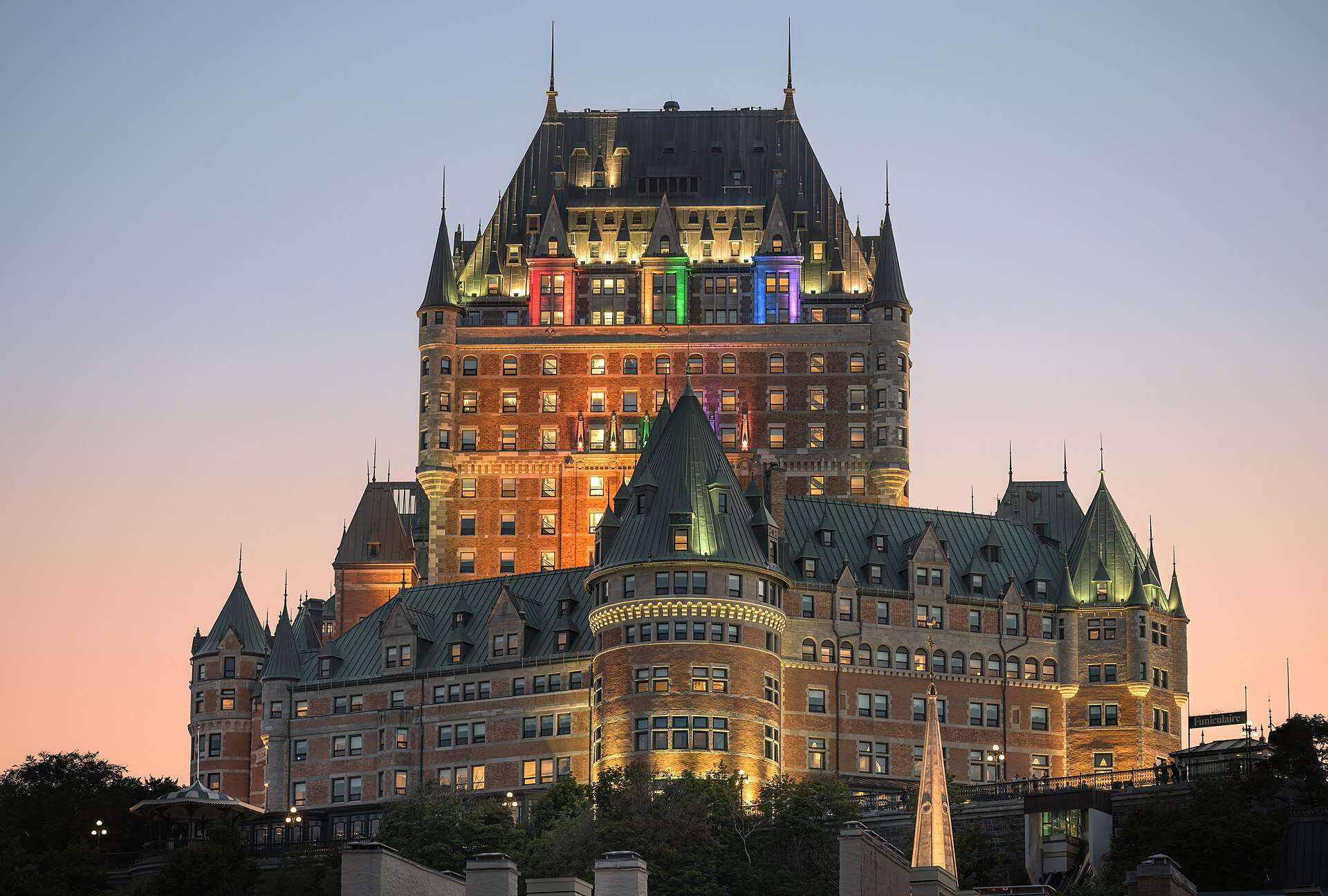
- The Château Frontenac — the world’s most photographed hotel by the usual claims — performs best exactly as the alarm directs: composed from Dufferin Terrace’s boardwalk, then entered for a bar hour among the railway-baron woodwork.
- Petit-Champlain’s lanes and Place Royale’s stone square hold the Lower Town’s postcard density; the Breakneck Stairs and funicular trade knees against dollars between levels.
- The Citadelle — the still-active fortress in the walls’ star corner — tours daily with summer’s changing of the guard; the Plains of Abraham roll out beside it as the 1759 battlefield turned city park.
- Montmorency Falls drops 83 meters — a genuine 30 taller than Niagara, narrower and prouder — at the city’s eastern edge: the suspension bridge over the brink and the cable car or stairs below, reached by city bus or a ten-minute drive; park details at sepaq.com.

Getting there
The train case, per the alarm: comparable time to the drive, zero fatigue tax, and Gare du Palais’ copper-roofed arrival already inside the day’s geography — the early departure (first trains land before eleven) buys the full circuit. Drivers gain Montmorency’s easy stop and Île d’Orléans’ farm stands at the cost of arriving pre-walked. In town, everything runs on foot plus one funicular; the falls add the city bus or a short cab. The evening train home makes dinner-in-the-walls possible; check the last departure and build backward.
The day
Start where you land: the Lower Town’s Petit-Champlain lanes and Place Royale before the cruise waves, the mural and the photo corners at morning value. Ascend — Breakneck Stairs for honor, funicular for sense — to Dufferin Terrace: the Château composed above the river, the boardwalk’s buskers, and the alarm’s photograph banked. The upper town circuit follows: the ramparts walk, the cathedral and seminary courtyards, the Citadelle tour or the Plains’ green sweep by appetite. Lunch runs Québécois with conviction — onion soup, tourtière, poutine defended seriously. The afternoon takes the Château’s interior for the alarm’s drink (the bar’s river windows settle the hotel question correctly), the Musée de la civilisation for weather insurance, or the bus out to Montmorency: the bridge over the brink, the spray at the base stairs, and the Niagara comparison delivered by any local within earshot. Dinner inside the walls, then the evening train with the city lit behind you.
When to go
June through September runs the full outdoor city — terraces, buskers, the guard’s summer changings, and the falls at snowmelt-fed volume early on. Fall colors the Plains and the river valley through October. Winter is its own famous animal: Carnaval (late Jan–Feb) and the ice-dressed Old Town favor the overnight version rather than a day’s dash — the alarm’s upgrade clause doubles in the cold. The train runs all of it; only your daylight budget changes.
Frequently Asked Questions
Is a Quebec City day trip from Montreal actually sane?
At the network’s honest edge — six-plus transit hours for six-plus city hours — and the train makes it work by deleting the fatigue. It’s the right call for tight itineraries; anyone with a spare night should spend it here, per the alarm’s standing upgrade.
Train or drive, finally?
Train, per the alarm, unless Montmorency-plus-Île d’Orléans stops or a carload’s economics rule — the drive’s Autoroute 20 is time-competitive and scenery-poor. The rested-arrival argument decides it for walkers, which this city makes of everyone.
Can I go inside the Château without staying?
Freely — lobby, shops, and the bar with the river view, which is the alarm’s actual assignment. Guided hotel tours run seasonally for the architecture-curious. The photograph from Dufferin Terrace remains the exterior’s whole job.
Is Montmorency really taller than Niagara?
By the numbers: 83 meters against Niagara’s 51 — taller, far narrower, and the locals’ delivery of this fact is a cultural institution in itself. The suspension bridge over the drop is the better thrill; spring melt is the volume season.
What about Carnaval?
Late January into February, the winter festival runs ice palaces, night parades, and canoe races across the river’s ice — magnificent, cold, and hotel-booked months out. It defeats the day-trip format honestly; treat it as the reason for the overnight this page keeps recommending.